A day on the ice: dressing for ice fishing
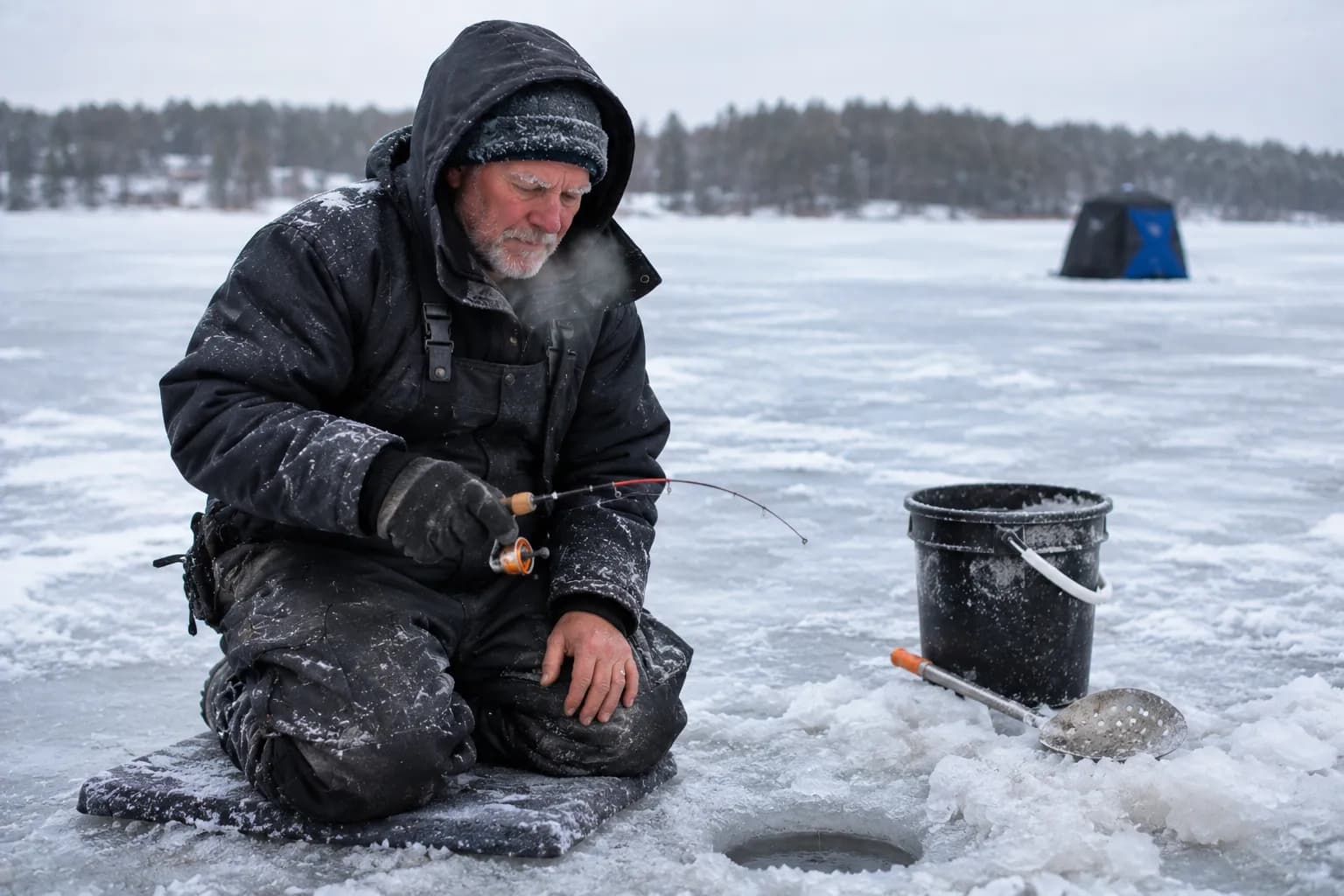
Ice fishing combines most of what makes cold hard to deal with. There is nothing to stop the wind, you spend hours sitting or kneeling on a frozen surface, and your hands keep going near cold water. Dressing well means dealing with all three.
None of it matters if the ice is not safe, so start there.
Check the ice before anything else
Ice is never the same thickness everywhere. It is often thinner near inlets, outlets, springs, docks, pressure ridges and anywhere with current, and it changes through the day and the season. Ask your state wildlife or natural resources agency, local authorities or a local bait shop about current conditions before you go out. As general guidance, many agencies advise at least 4 inches of clear, new ice for walking, but treat that as a minimum, not a guarantee, and check what applies where you fish.
Late in the season is when even experienced anglers get caught out. Ice that held all winter can weaken quickly once the days warm, and snow on top both hides weak spots and slows the ice beneath it from thickening. Cloudy, white or gray ice is weaker than clear ice. If the ice looks dark, porous or slushy, or there is water on top of it, turn back.
Never go out alone, and tell someone on shore where you will be. Carry ice picks where you can reach them, plus a throw rope, and test the ice ahead with a spud bar as you walk. If someone goes through, call 911 and do not walk out after them.
Getting out there
Most of the hard work happens before the first line goes down. Walking out, pulling a sled and drilling holes with a hand auger will have you warm in minutes, and sweat now means a cold afternoon. Go out with the parka open or packed on the sled, and close up once the holes are drilled. Ice cleats or other traction aids on your boots make the walk safer, especially on bare, wind-polished ice where a fall is a real injury risk.
Some anglers wear a flotation suit or a life jacket, especially early and late in the season, when the ice is least predictable. Keep your ice picks where either hand can grab them, such as around your neck, not buried in a pocket under the parka. Pack a dry bag on the sled with spare gloves, spare socks, a towel and an extra layer, so a soaked glove or a sock wet from slush does not end the day.
Wind on open ice
A frozen lake is flat and open, so the wind hits harder than it does in town or in the woods. The National Weather Service's wind chill chart shows how fast it adds up: 0°F air with a 15 mph wind feels like −19°F on exposed skin. Out here, a shell that blocks wind matters more than an extra layer underneath it. Set up with your back to the wind if you fish in the open, and use a windbreak or a shelter when you can.
Cold from below
Sitting on a bucket or kneeling at the hole puts you in direct contact with the cold, and contact pulls heat away far faster than air does. A foam pad on the bucket lid and a kneeling pad at the hole help a lot. So do bibs with a high rise. The CHILL-BLOC® Bib Overalls have a high front and back rise that keeps your lower back covered when you lean over the hole, 300g insulation and insulated front and back pockets, and the thigh-high leg zips make them easier to get on and off over boots.
A parka on top
Over the bibs, a long insulated parka covers the hips and seat and closes the gap at the waist where wind gets in. The CHILL-BLOC® Parka has 200g polyester insulation, bound seams that block drafts, knit storm cuffs and an attached fur-lined hood to pull up when the wind picks up. Open it when you are drilling holes or hauling gear, and close it again before you sit down.
Inside a shelter
A pop-up or hub shelter changes the problem. Out of the wind and with a heater running, it can get warm enough to sweat while you sit in full insulation, and then you step outside to check a tip-up straight into the wind chill. Open the parka and the bib leg zips while you are inside, take your hat off if you need to, and close everything up before you step out, not after.
Any fuel-burning heater in a shelter produces carbon monoxide, which you cannot see or smell. Use a heater made for use in a shelter, follow the maker's instructions, keep the vents open and consider a battery carbon monoxide alarm. Headache, dizziness, nausea or drowsiness inside a shelter mean getting everyone out into fresh air at once, and calling 911 if anyone does not recover quickly or seems confused.
Gloves for wet work
Lines, bait, fish and slush all mean wet hands. A glove with a waterproof membrane keeps water out as long as the water stays below the cuff. The CHILL-BLOC® Softshell Insulated Gloves have a HiPora™ waterproof insert and reinforced fingertips and are built for dexterity, which helps with knots and lines. The CHILL-BLOC® Coldshield Gloves are stated to −25°F, with a HiPora™ membrane and a gauntlet cuff, for the long stretches when you are mostly watching your lines.
No glove survives a hand pushed into the hole. Take it off for that, dry your hand on a towel and get the glove back on quickly. Keep a spare pair in an inside pocket, where body heat keeps them warm, and swap when the first pair gets wet inside.
Face and feet
Exposed skin takes the full force of the wind chill. A neck gaiter or a balaclava over the nose and cheeks makes a long afternoon far easier, and it packs into a pocket until the wind picks up. For feet, wear insulated waterproof boots with room for a thick sock, and stand on a pad rather than bare ice. Cold feet on the ice usually mean boots that are too tight or socks that are damp.
Quick recap
Check the ice with people who know that water before you go, and never fish alone. Then dress for wind and for cold from below, with high-rise bibs, a long parka, waterproof gloves and a spare pair, and vent before you sweat, whether you are drilling holes or sitting in a warm shelter.