Dressing for long sits: hunting and wildlife watching
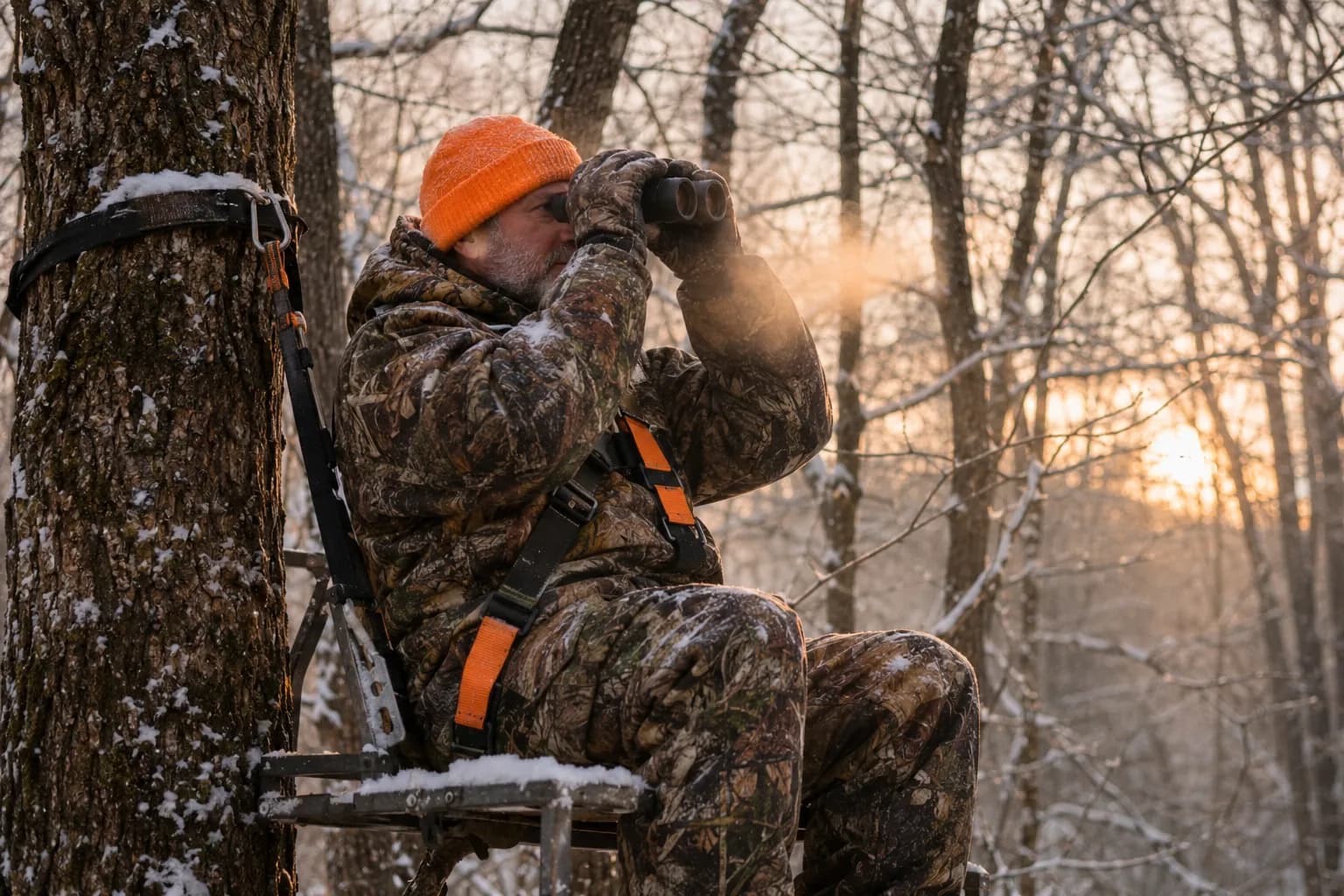
Hunting from a stand or a blind, or waiting for wildlife with a pair of binoculars, turns the usual cold-weather problem upside down. A crew on a job site makes heat all day. You make plenty of it on the walk in, then sit still for hours making very little.
Dressing for that means planning for two different jobs: the walk and the sit.
Think the whole sit through
It helps to think a sit through before you leave the truck. Take a morning in a tree stand: a half-hour walk in the dark at around 25°F, then four hours of sitting, mostly still. The air often keeps cooling until around sunrise, so the coldest part of the morning can come an hour after you have stopped moving, and a stand above the ground catches more wind than the trail you walked in on. Dress for that hour, not for the temperature at the truck.
That means packing more insulation than feels necessary at the start, and checking the forecast wind as well as the temperature. An afternoon sit runs the other way: you walk in during the warmest part of the day and sit into the cooling evening, so arriving sweaty is more likely and the last hour is the coldest. Either way, pack layers in the order you will put them on, so the next one is always on top.
The walk in
The most common mistake is walking in fully dressed. You arrive damp with sweat, then sit down in it, and damp layers pull heat away from you for the rest of the morning. Walk in with a base layer and a light layer on top, and carry the insulation in a pack. Go slower than you want to, and open zips before you start to sweat rather than after.
A lightweight shell is enough for most walks. The CHILL-BLOC® Camo Softshell Jacket blocks wind and light rain, and its removable thermal lining can stay in the pack for the walk and go back in at the stand. Its adjustable cuffs can be opened to dump heat on a climb and closed again once you stop.
Dress at the stand
Once you are settled, put the insulation on before you feel cold. Cooling off for a few minutes is fine; waiting until you shiver means spending the next hour trying to win that heat back. This is where one-piece insulation earns its place. The CHILL-BLOC® Camo Coveralls are made for long sits, rated to −50°F, in a woodland camo print, and a one-piece garment has no gap at the waist for cold air to find when you twist or lean.
If you prefer two pieces, the CHILL-BLOC® Camo Bib Overalls have 300g insulation and a high front and back rise, and the thigh-high leg zips make them easier to get on over boots once you reach the stand. Pair them with an insulated jacket that also goes on at the stand, so the walk in stays light and cool.
Staying warm without moving
Your body makes heat from food, so eat before you go and bring something to snack on through the sit. A warm, non-alcoholic drink from an insulated bottle is a welcome lift partway through a cold morning. Skip alcohol altogether: the CDC's cold weather guidance warns that it makes your body lose heat faster, even while you feel warmer.
You can also make heat without making noise. Slowly tensing and relaxing the big muscles in your legs and seat, curling your toes inside your boots and pressing your hands together inside a muff all warm you a little without visible movement. Do it in short spells before you are cold, and stop well short of a sweat. If you still get colder through the morning, add a layer early rather than trying to wait it out.
Quiet fabrics and quiet habits
Sound carries a long way on a still, cold morning. Before the season, rub a sleeve against your side and work the pockets and zips at home, where you can hear them. Hook-and-loop closures are loud; a zip can be opened slowly or left half open before you settle. Put the things you will reach for, like a call, a rangefinder or a snack, where you can get them without unzipping a layer or rustling a bag.
Seat, hands and face
Whatever you sit on pulls heat out of you, and a cold metal seat or frozen ground does it much faster than air. A closed-cell foam pad under you makes a bigger difference than another layer on top. Keep your boots off cold metal where you can, with something insulating under your feet.
Hands are the hard part, because at least one of them has to work. Many hunters keep the shooting hand in a thinner glove and tuck both hands into a muff or warm pocket with a heat pack between moments. For the face, a balaclava such as the CHILL-BLOC® Flex Balaclava covers head, face and neck in a slim, moisture-wicking layer that fits under a hat.
The walk out and the work after
The sit is not the end of the day. If you take an animal, field dressing and dragging it out are hard, hot work, and wet hands in freezing air get cold fast. Take outer layers off before you start so they stay clean and dry, and put them back on as soon as you stop. Many hunters carry thin disposable gloves for the dressing and keep a dry insulated pair in an inner pocket for afterward.
The walk out deserves the same thought as the walk in. You may be tired, the light may be going, and you may be carrying more weight. Open the coveralls or bibs at the front before you set off, loosen the face covering and let yourself cool as you walk. Leave a dry base layer and dry socks in the vehicle. Changing into them before the drive home is warmer than sitting in damp clothes with the heater on.
Blaze orange and safety
Camo is not always allowed on its own. Many states require hunters to wear blaze orange during certain seasons, and the rules on how much, where on the body and for which game vary from state to state and can change between seasons. Check your state wildlife agency's current regulations before you go, and wear the orange over your camo when the rules call for it. People watching wildlife in the same woods during a hunting season are often advised to wear it too.
If you hunt from a tree stand, wear a full-body harness and stay attached from the moment you leave the ground. Tell someone where you are and when you expect to be back. Know the signs of hypothermia: shivering you cannot stop or clumsy hands mean ending the sit and getting warm, and confusion or slurred speech means calling 911.
Quick recap
Walk in light and cool, and dress for the coldest hour of the sit rather than the start. Put insulation on before you get cold, insulate what you sit on and keep eating. Before every season, check your state wildlife agency's blaze orange rules, and wear a full-body harness in any tree stand.