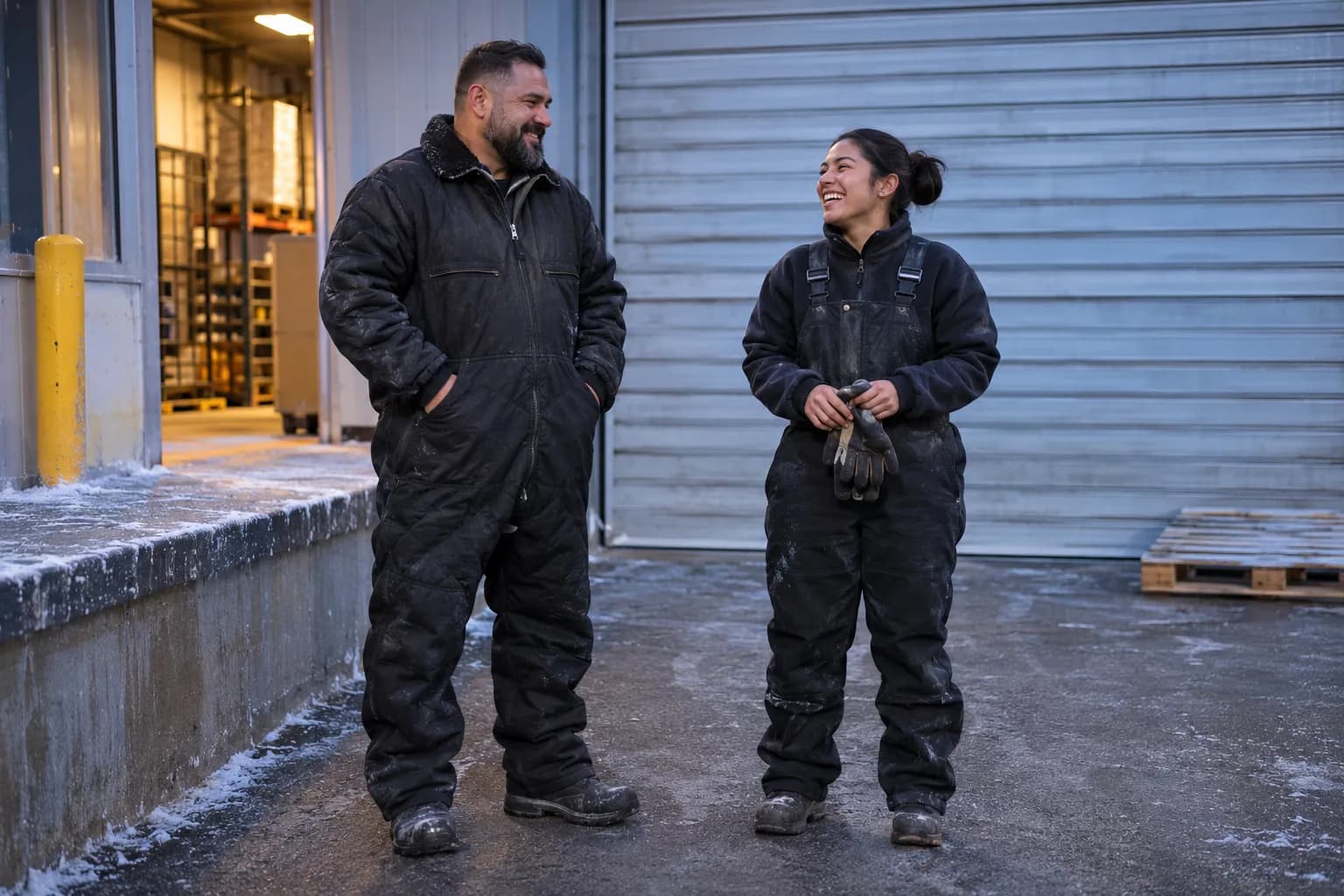
Freezer shifts: warm-up breaks, rotation and gear

A blast freezer does not have a mild afternoon. The temperature is set, the cold is constant, and the only things that change over a shift are how long people stay inside and what state they and their gear are in when they go back in. That makes freezer work more of a scheduling problem than a weather problem.
Gear matters, but the routine around it matters just as much. Here is how crews and supervisors can organize a cold-storage shift so the cold stays manageable from the first entry to the last, without relying on anyone to tough it out or to notice their own early warning signs.
Why scheduled warm-up breaks matter
Workers in the cold rarely ask for a break at the moment they need one. Cold numbs hands first and judgment soon after, and nobody wants to be the first to step out. A break that is scheduled, rather than requested, takes the decision away from the person least able to make it.
This is not a new idea. The ACGIH publishes a work and warm-up schedule that shortens work periods and adds breaks as temperatures fall and wind rises, and OSHA's cold stress guidance calls for frequent breaks in warm, dry areas. The principle carries straight into a freezer: the colder the zone, the shorter the stint and the more often people warm up. Your site's cold stress program should set the actual intervals. If it does not have one, ask for it.
Rotate people between zones
Where a facility has areas at different temperatures, rotating people through them spreads the hardest exposure across the crew. Someone who has spent the morning in the blast freezer can take the afternoon in the chiller or on staging, and a fresh person takes their place. Rotation also breaks up long static tasks, which are colder than walking ones, and gives everyone a turn at work that lets the body make its own heat.
Pair it with a buddy system. In a large freezer, two people who check on each other will spot slurred words, fumbling hands or unusual quiet much faster than a supervisor at a desk. Agree on it at the start of the shift, so checking on a partner is part of the job rather than an awkward favor.
Keep gear warm and dry between entries
A common habit is to hang coveralls and gloves on a hook by the freezer door during breaks. That hook is often in the coldest part of the anteroom, so the gear is still cold when it goes back on, and anything damp from the last stint has started to freeze. Insulation that starts cold has to be warmed up by your body, and that heat comes straight off you.
Bring gear into the break room, or hang it somewhere at room temperature with the zips open so moisture can escape. With one-piece insulation such as the CHILL-BLOC® Fur Collar Coveralls, stated to −50°F with an attached insulated hood and a fleece-lined collar, starting each entry in a warm, dry garment is most of the battle.
Dry gloves at every break
Gloves are where moisture builds first: sweat from the inside, frost and condensation from the outside. Take them off at every break, open the cuffs and stand them where warm air can reach inside. Avoid pressing them against a heater or radiator, which can stiffen leather and damage linings. A second pair rotating with the first means you always go back in with a dry one.
A waterproof membrane, like the HiPora™ membrane in the CHILL-BLOC® Coldshield Gloves, keeps outside moisture out, and the gauntlet cuff keeps frost from falling in at the wrist. Sweat still collects inside any glove, so these need drying at breaks too.
Food, water and newcomers
The body burns more fuel to keep warm, so eat properly before and during a freezer shift, and use breaks for warm, sweet drinks and water. People drink less in the cold because they do not feel thirsty, but they still lose fluid. Leave alcohol out entirely.
New starters, and anyone returning after time away, need a gentler start. OSHA's guidance is to build up their workload gradually and give them more frequent breaks in warm areas while they adjust to the cold. Pair them with someone experienced, add a CHILL-BLOC® Fleece Balaclava to their kit for the face and neck, and make sure they know that using the warm-up area is expected, not a sign of weakness.
One shift, step by step
Take a picker working repeated entries into a blast freezer, with a chill room and a staging area on the same floor. The first entry starts in coveralls and gloves that spent the night indoors, not in a locker by the dock. At the first scheduled break the gloves come off and stand open in the break room, the coverall front zip comes down, and there is a warm, sweet drink before going back in.
After the meal break, rotation moves the picker to staging while someone fresh takes the freezer. Back inside later, the spare gloves go on and the first pair keeps drying. The last entries of the day are where people get careless, because they are tired and want to finish, so that is when a buddy check counts most and when a supervisor should be on the floor rather than at a desk.
Peak season and overtime
Cold storage is often busiest when the schedule is least forgiving. Holiday peaks and seasonal surges bring overtime, longer shifts and temporary staff who have never worked in a freezer, which is exactly the mix that tempts people to skip breaks and stay inside to finish an order. A warm-up schedule that holds in a quiet week and falls apart in a busy one is not doing its job.
Plan for it before it arrives. Order enough gloves that every worker has a dry spare, check that the coverall sizes on the shelf fit the new starters, and make sure the break room has space to hang a full crew's gear. Keep a sign-in board at the freezer door so everyone knows who is inside, and treat a skipped break as a problem in the plan, not something to praise.
Quick recap
In a freezer the cold never changes, so the routine has to do the work: scheduled warm-up breaks, rotation between zones and a buddy for everyone. Bring gear somewhere warm between entries, dry gloves at every break and give newcomers time to adjust. Hold to that plan hardest in peak season, when it is most tempting to drop it.