Putting winter gear away for the off-season
The end of the cold season is when a lot of insulated workwear gets damaged, and nobody is wearing it at the time. A parka goes into a bag still carrying a winter of sweat, a set of bibs gets folded tight on a garage shelf, and by fall the insulation is flat, the zip is stuck and something has been nesting in the hood.
An hour of work in spring avoids nearly all of that.
Clean it before it goes away
Dirt, body oils and road salt keep working on a garment while it sits. Oils and grime flatten insulation, salt dries into the shell fabric, and crumbs or sweat in the pockets draw pests. Wash every insulated piece before storage, following its care label, even if it looks clean. Empty every pocket first, including the inside ones, and brush mud and grit out of leg zips and cuffs before the wash, not after.
Treat headwear and gloves the same way. A balaclava or neck gaiter that spent the winter against your face needs a wash before it spends the summer in a drawer, and gloves need to be cleaned and dried right through before they are packed, not tossed in damp from the last shift.
Dry means completely dry
A garment can feel dry on the outside and still hold moisture in the seams, the collar and the thickest parts of the fill. Put away like that, it grows mildew. After washing and drying as the label says, hang each piece somewhere airy for a day or two before storing it. Check the heavy spots by hand: the collar, the cuffs, the seat and, on a coat like the CHILL-BLOC® Parka, the attached fur-lined hood.
Don't crush the insulation
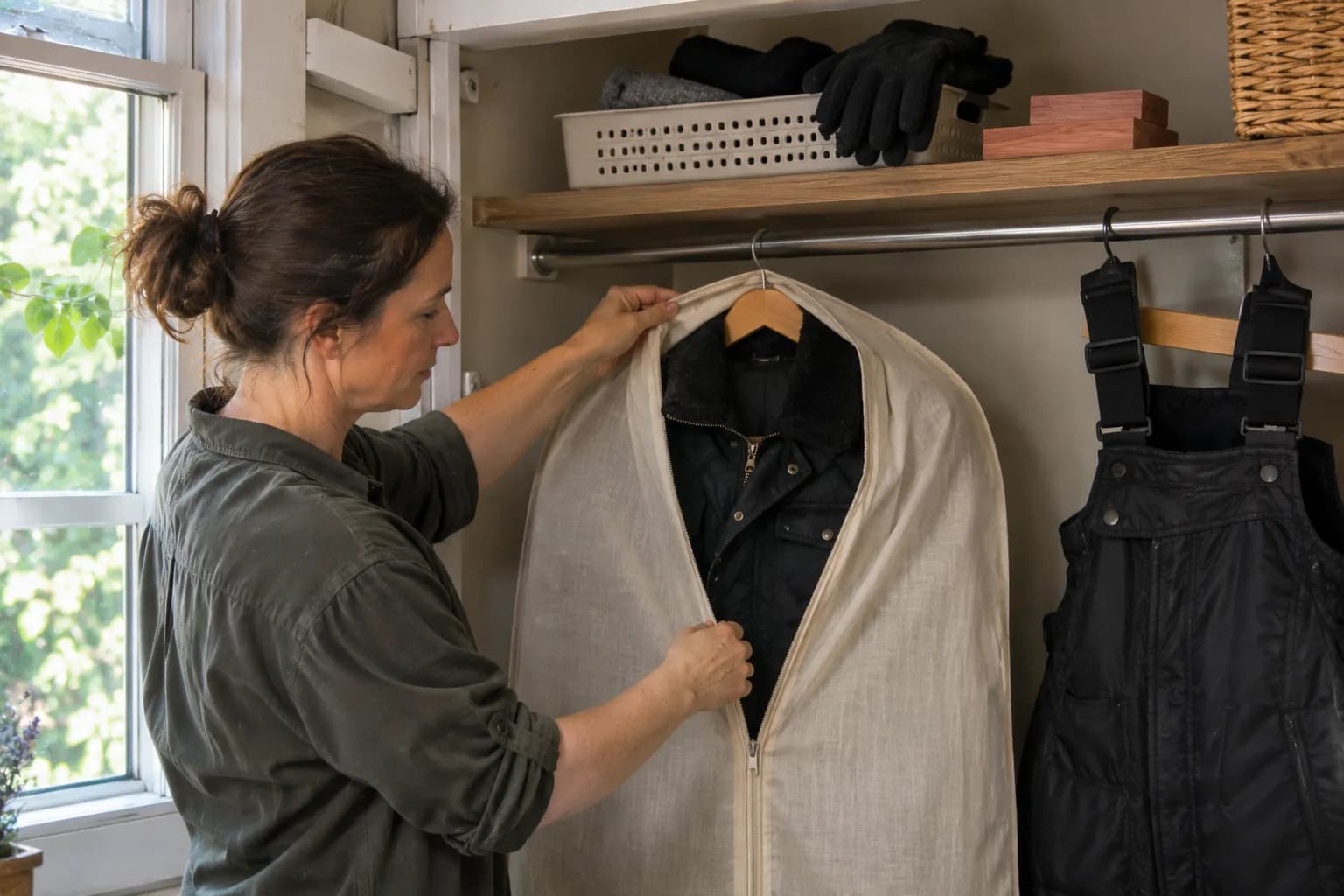
Insulation works by trapping air, and months under pressure teach it to stay flat. Vacuum bags and tightly packed bins are fine for summer clothes but the wrong place for a parka, coveralls or bibs. Hang insulated jackets and coveralls on a wide, sturdy hanger so the shoulders keep their shape, in a breathable garment bag or simply with space around them. If you have to fold something, fold it loosely and put nothing heavy on top.
Bib overalls hang well from their suspenders looped over a hanger. On a pair like the CHILL-BLOC® Bib Overalls, that keeps the 300g fill hanging loose instead of folded flat under the bib for six months. Close the thigh-high leg zips and button flaps first so the legs hang straight and the zips do not catch on anything.
Linings, hoods and small parts
Garments with parts that come off are the ones that come back incomplete. A removable thermal lining or a detachable hood stored in a different bag from its shell is easy to lose over a summer. On a softshell like the CHILL-BLOC® Polarlite Softshell Parka, wash the lining and hood as the label says, let them dry fully, then zip or attach them back onto the shell before it goes on the hanger. If that is not possible, hang them in a bag on the same hanger.
Waist-length jackets take less space but need the same care. The CHILL-BLOC® Boreal Jacket has a fleece lining, and a lining is one of the places where sweat and smell hide, so give it the full airing before it goes into the closet. Spare gloves, balaclavas, gaiters and headbands are easiest to find in fall if each person's set goes into one breathable bag with a name on it, not scattered across pockets and shelves.
Fix it now, not at the first freeze
Storage is the right time for repairs because nothing is urgent. Run every zip the full length and back, brush grit out of the teeth, and note any slider that slips or teeth that are missing. Check seams at the crotch, shoulders and pockets, look for small tears in the shell, and look at cuffs and knees for wear. A small tear patched in spring stays small. Repair shops are also far less busy in spring than in November.
Keep it away from damp and pests
Pick a spot that is dry, dark and indoors. Basements, sheds, truck boxes and unheated garages swing in temperature and humidity, and that is where mildew starts. Mice will happily pull insulation out of a stored coat to build a nest, and moths and other insects go for dirty fabric. A clean garment in a closed closet, off the floor, avoids most of this. Give it a quick look halfway through the summer.
When the gear comes back out in fall, look before you put it on. Check pockets, hoods and the insides of the legs for droppings, nesting material or chewed fill, give each piece a shake and a few hours of fresh air, and run the zips once more. Then try it on over the layers you will actually wear, a week or two before the cold arrives, so any fit problem shows up while there is still time to fix it.
When there is no off-season
Cold-storage and freezer crews wear insulated gear in July as well as January, so for them storage is really rotation. The goal is the same: no garment should sit damp, dirty or crushed for weeks. If a crew keeps spare coveralls or parkas for busy periods or new starters, store the spares the way you would seasonal gear, clean, dry, hung and labeled by size, and check them every few months instead of once a year.
Gear worn every day of the year also needs a planned break for cleaning and repairs. Pick a quieter week, wash each person's garments in turn while they wear a spare, and use that week for the zip and seam checks described above. That is far easier on a schedule than finding a broken zip on the morning of a long shift in a blast freezer.
Write down the sizes
Before anything goes into a closet, take two minutes to note who wears what. For a crew, that means each person's size in each garment and whether it worked: sleeves that rode up when reaching, a seat that was tight over a fleece, a hood that would not close over a hard hat. Keep the note with the gear or in the order file. Next season's order then starts from what actually fitted, not from memory.
Then label each bag or hanger with a name and size, so the gear comes out in fall with no guessing. If someone has left the crew or a garment is past saving, note that too, so the next order covers the gaps instead of discovering them in the first cold week.
Quick recap
Put winter gear away clean, completely dry and hanging loose, with every lining, hood and spare piece kept with the garment or person it belongs to. Store it somewhere dry and indoors, fix what is broken while nothing is urgent, and write down what fitted, so fall starts with gear that is ready to work.