Sweat is the enemy: managing moisture in the cold
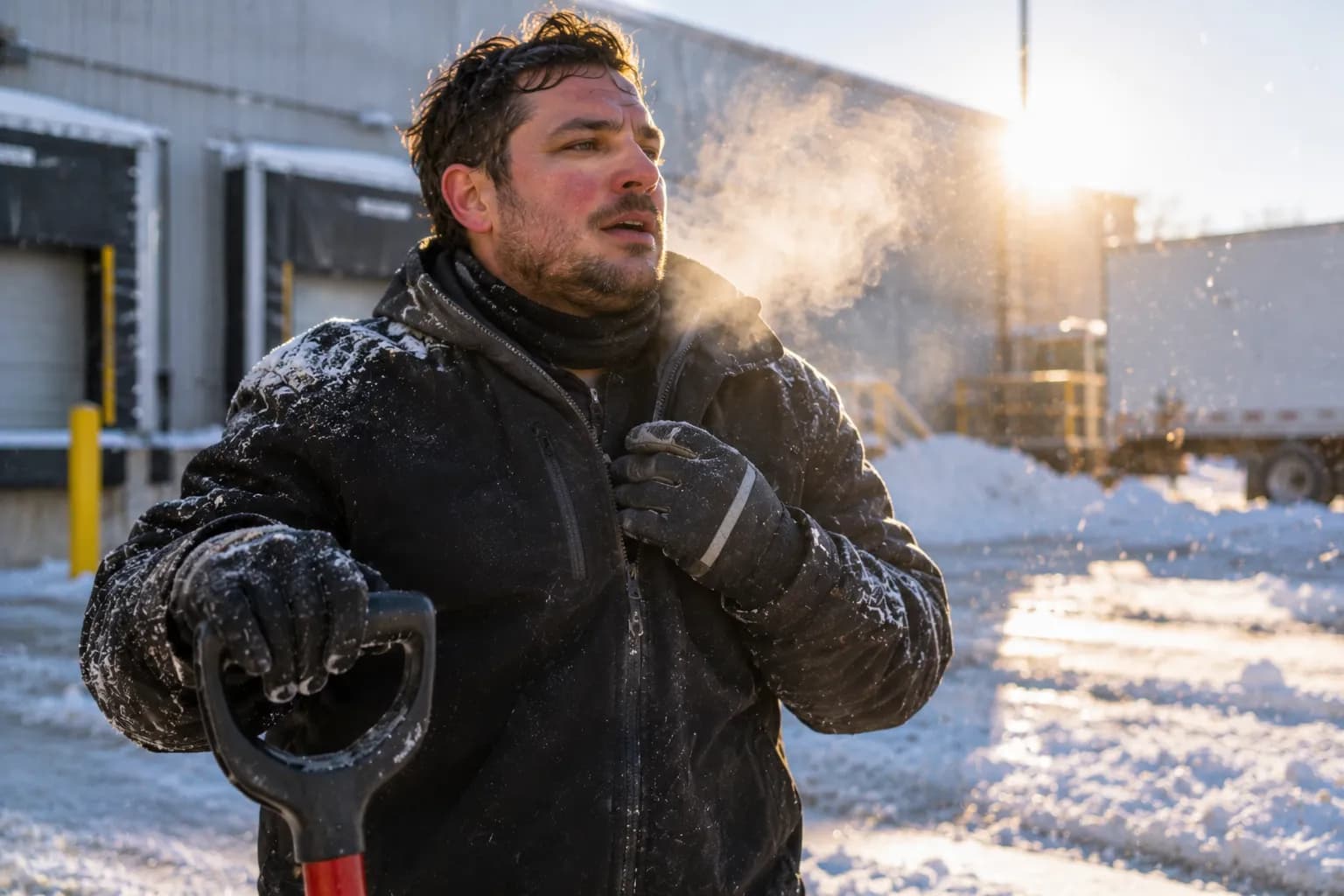
Shoveling a walkway, loading a trailer, climbing a scaffold in January. The hardest cold-weather work is often the warmest, at least for the first hour. Then you stop, the sweat in your shirt cools, and you end up colder than if you had never warmed up at all.
The cold you can see coming. The moisture you make yourself is harder to manage, and it is behind a lot of miserable afternoons outdoors. The good news is that most of it can be controlled with timing rather than more gear.
Why damp clothing gets cold
Insulation works by trapping still air, and still air is a poor conductor of heat. Water is the opposite. It conducts heat away from the body much faster than air does, so a damp layer draws warmth out of you instead of holding it in. Wet fibers also clump together and lose the small air spaces that were doing the insulating.
Then there is evaporation. As sweat dries off your skin and clothing it carries heat away, and in cold air it keeps doing that long after the work has stopped. A damp shirt in the cold is a chill you carry around with you.
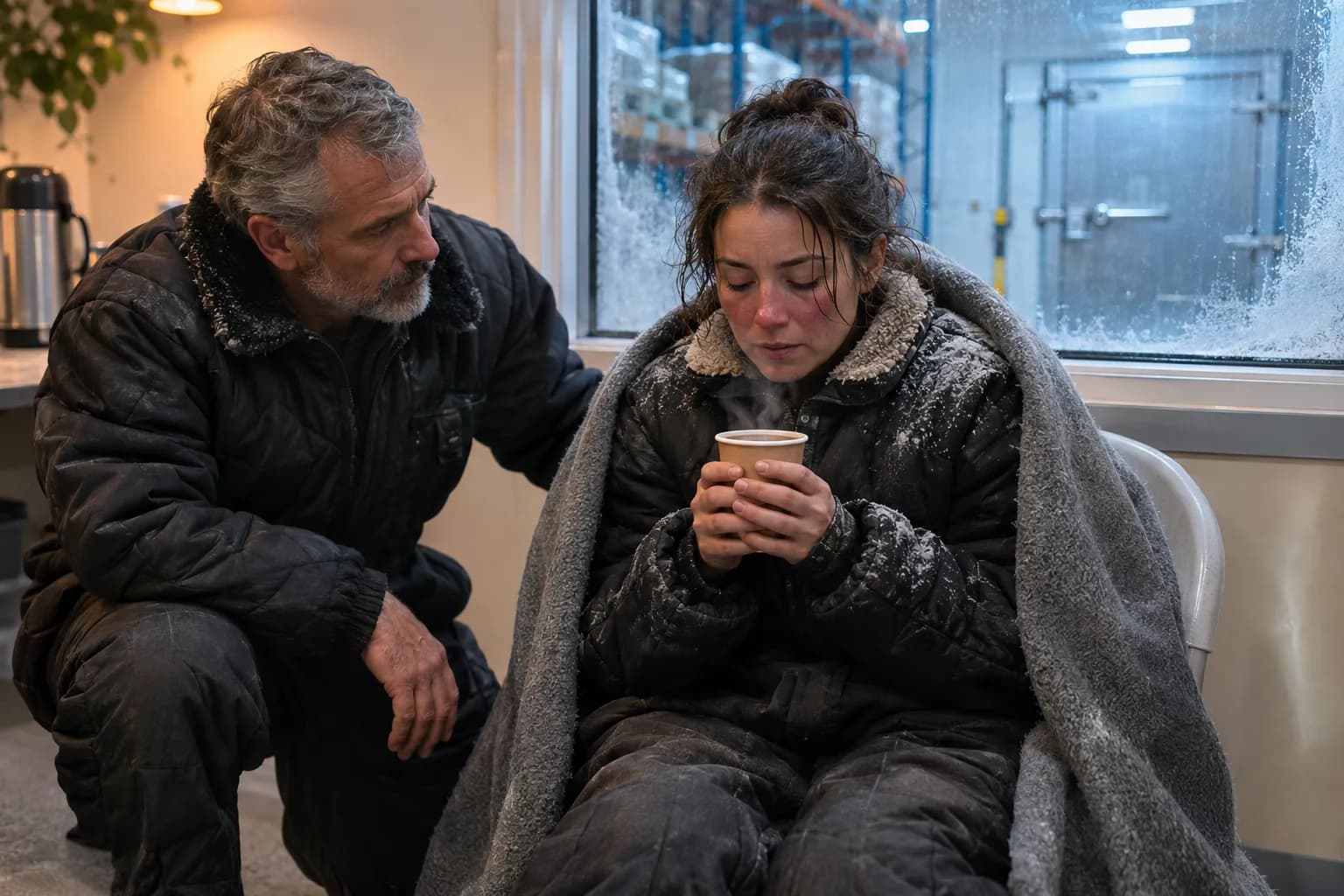
The warning sign is the chill when you stop. If you go from warm to shivering within a few minutes of standing still, your layers are wet, and the next break is the time to change something. Watch for it in coworkers too. Someone who worked hard all morning and is now standing around in a damp shirt is set up for hypothermia, even on a day that does not feel especially cold.
Wicking layers, not cotton
The layer against your skin should move moisture outward, where it can spread out and evaporate away from you. Synthetic and merino base layers do this. Cotton soaks up sweat, holds it against the skin and dries slowly, which is why it stays wet at exactly the moment you want to be dry.
The head and neck sweat more than people expect under a hood or hard hat. A thin, moisture-wicking piece such as the CHILL-BLOC® Flex Balaclava, ultra-light with a brushed lining, copes with hard work better than a thick knit hat that soaks through by mid-morning.
Vent before you sweat
The trick is to let heat out before it turns into sweat, not after. If you know the next stretch of work is shoveling or lifting, open the front zip, drop the hood or take off a layer before you start. Once your shirt is wet, venting only cools the wet layer faster.
Start a little cool. If you feel comfortable standing in the yard before work begins, you will be too warm soon after you start. Feeling slightly chilly for the first few minutes is normal and passes once you are moving. The opposite habit, zipping everything up because the first step outside felt cold, is how most people end up soaked by mid-morning.
Outerwear that makes this easy helps. The CHILL-BLOC® Polarlite Softshell Parka blocks wind and light rain while letting you move, and its removable thermal lining and detachable hood let you strip back for hard work without giving up the shell. Bibs with thigh-high leg zippers, such as the CHILL-BLOC® Bib Overalls, let you vent your legs without undressing.
Pace and breaks
Steady work makes less sweat than bursts. A pace you can hold all morning, a little slower than your fastest, keeps you warm without soaking you. Short pauses before you start sweating hard work better than one long stop once you already are.
On a long walkway, that means working at a pace where you could still hold a conversation, and pausing to straighten up and open the front zip when you feel warmth building across your back, before it turns damp. Going flat out and then stopping for a rest once you are soaked is the pattern that leads to the worst chill of the day.
Use breaks to deal with moisture, not just to rest. If your base layer is damp, change it while you are somewhere warm rather than putting your jacket back on over it. A spare base layer in a dry bag weighs almost nothing and can save the second half of the day.
Gloves and socks go first
Hands and feet are usually the first things to get wet, from sweat inside and snow or slush outside, and they are already the last places to get warm blood. Swap gloves as soon as they feel damp and keep the spare pair inside your jacket, where it stays warm. A waterproof insert, like the HiPora™ insert in the CHILL-BLOC® Softshell Insulated Gloves, keeps snow out, but you still need to let sweat out at breaks.
Change socks at midday if your feet feel damp, and loosen your boot laces at breaks so the insides can air. Wool and synthetic socks move moisture away from the skin. Cotton socks hold it, and they are the quickest route to cold feet by mid-afternoon.
How it changes by job
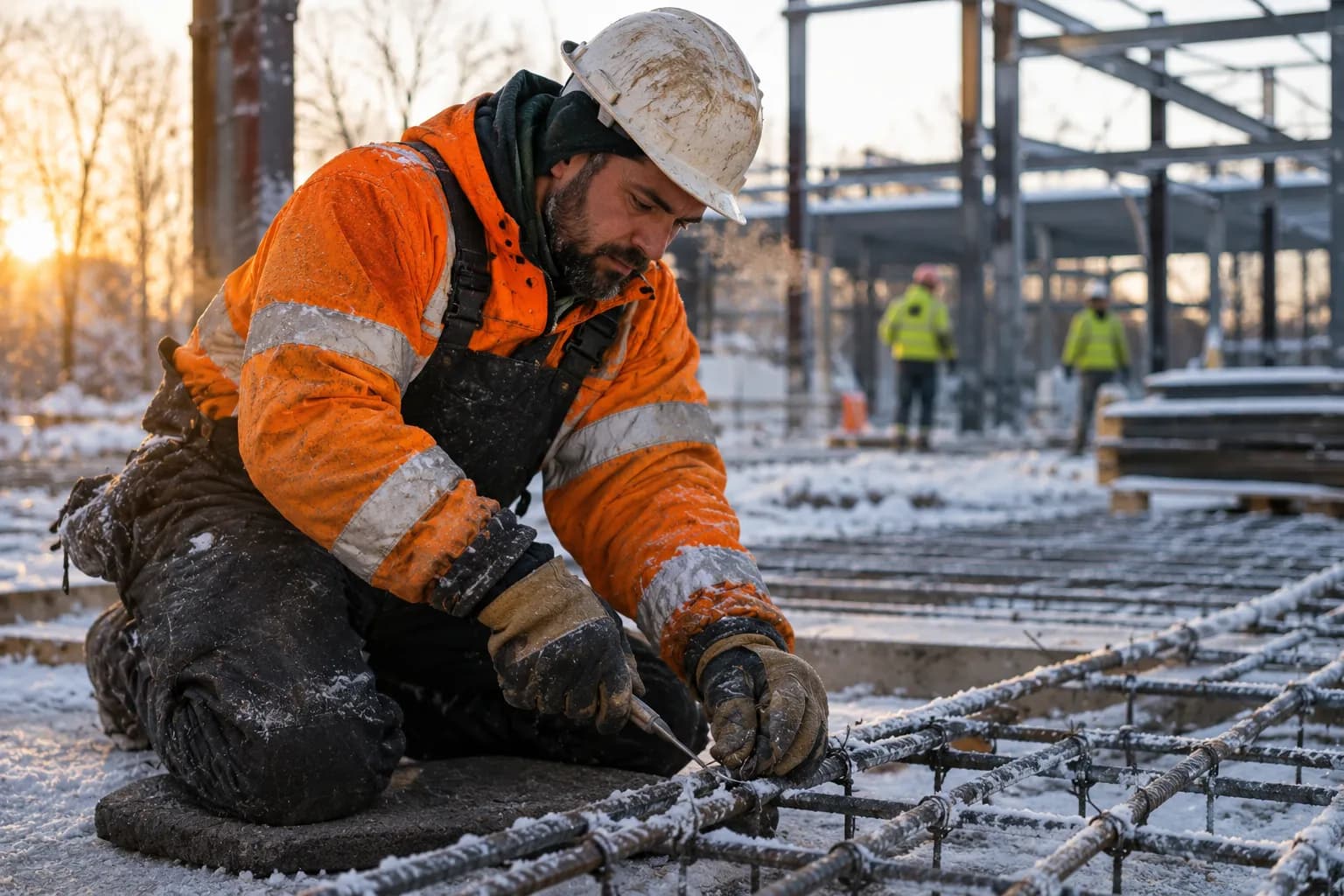
The balance shifts with the work. A shoveler or a laborer carrying block makes heat in bursts and needs layers that come off easily, with venting doing most of the work. An equipment operator makes little heat in the cab and gets cold from the outside in, so for them sweat matters most when they climb down and start working hard while still dressed for sitting still.
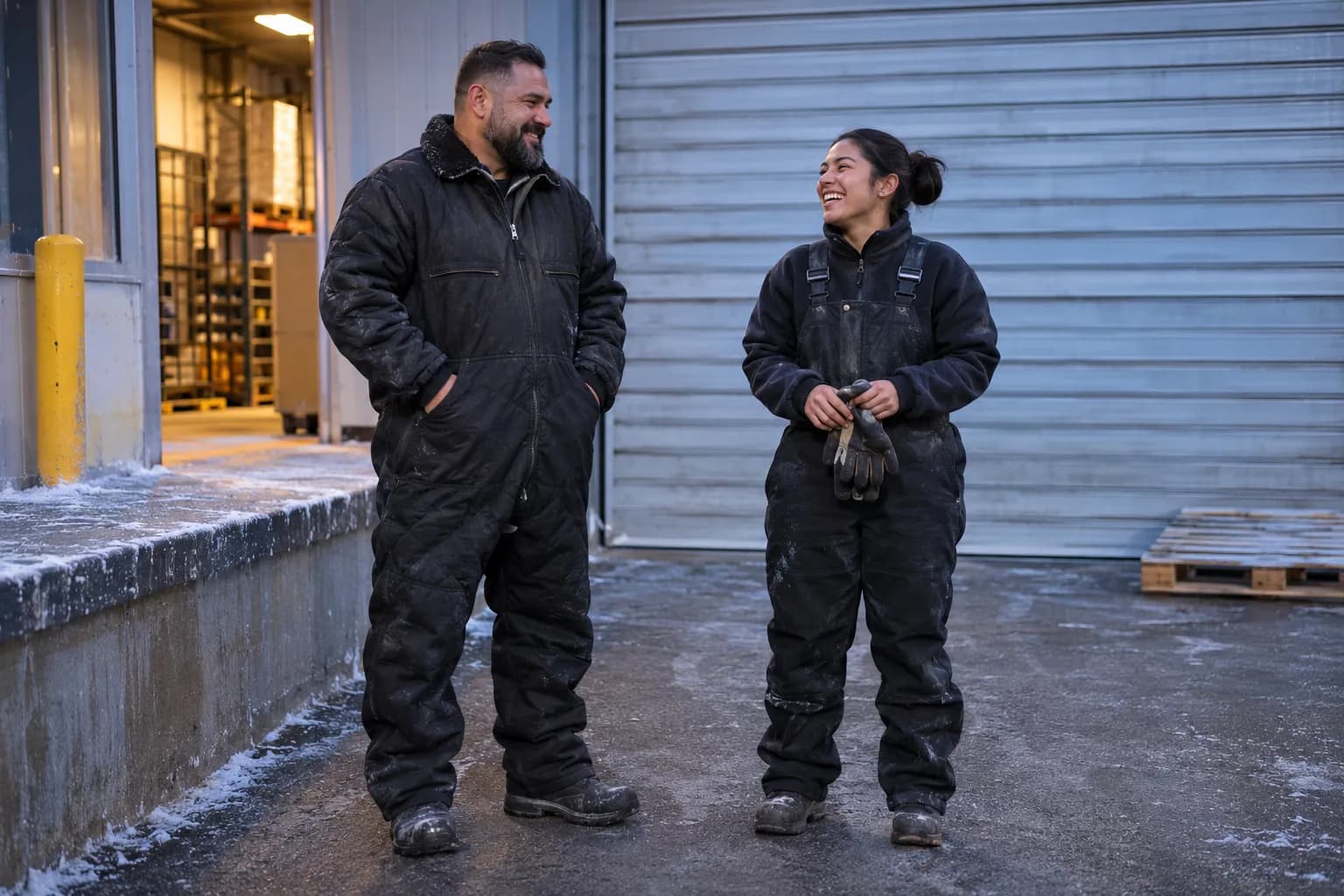
The hardest pattern is stop-start work: moving hard, then standing, then moving again, such as loading a trailer in bursts or going back and forth between a heated building and the yard. Dress for the standing and vent for the working, not the other way around. In late fall and early spring, when temperatures swing through the day, the layers you can take off matter more than the warmest one you own.
Dry everything overnight
Gear that goes on damp in the morning starts the day cold. At the end of the shift, open every zip, take out removable linings, open glove cuffs and pull the insoles out of your boots. Hang it all somewhere warm with air moving around it, not stuffed in a bag in the truck. Avoid direct high heat, which can damage membranes, leather and insulation. Dry gear tomorrow starts with ten minutes tonight.
Quick recap
Wet clothing pulls heat away far faster than dry, so the aim is to make less sweat and get rid of what you do make. Wear wicking layers, start a little cool, vent before the hard work and change damp gloves, socks and base layers at breaks. Then dry everything properly overnight, so tomorrow starts dry.