The pre-shift cold-weather checklist
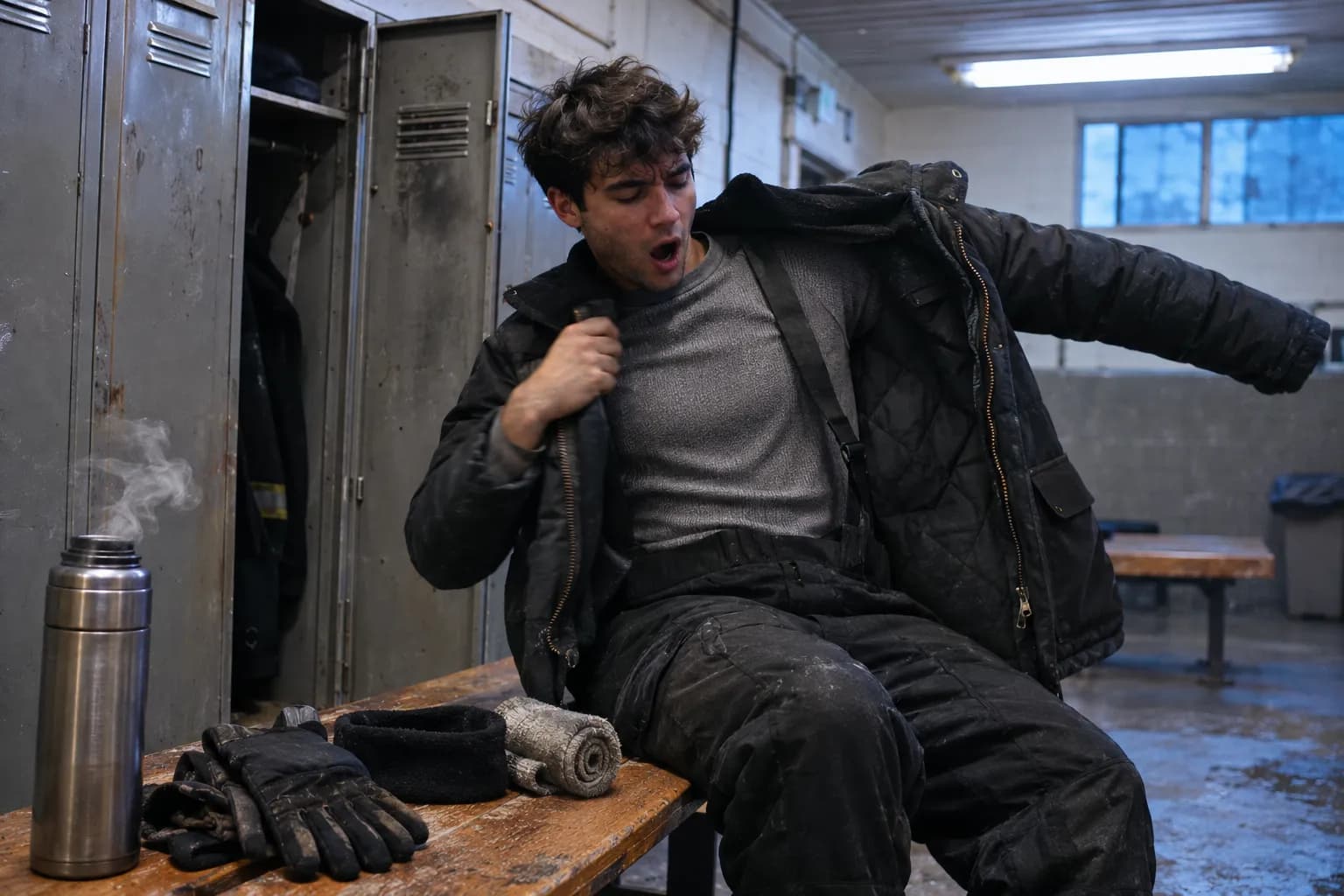
Most of what goes wrong on a cold shift was decided before it started. A cotton t-shirt under the coveralls, the only pair of gloves still damp from yesterday, a zip that has been sticking for a week. None of it feels like a problem in the locker room. All of it is a problem three hours in.
This is the walk-through worth doing before you clock in, in roughly the order you get dressed. It takes about as long as a cup of coffee, and it saves the kind of mid-shift fix that is impossible with cold hands.
Check the forecast, including the wind
Look at the air temperature, then look at the wind speed and the wind chill, because those are what your face and hands will actually deal with. A still morning and a windy morning at the same temperature are different shifts. Check how conditions change through the day as well. A dry start that turns to sleet by lunch means packing a spare layer and a shell now, not wishing you had one later.
Dress from the skin out
Start with the base layer, and make it synthetic or merino, not cotton. Cotton holds sweat against the skin and stays wet, and wet is cold. Add a mid layer if the job is mostly static. If you will be walking or lifting all shift, you may not need one at all, and an extra layer you sweat into does more harm than good.
Then the insulated layer. It should go on easily over everything underneath, with room to reach overhead and crouch without the fabric pulling tight across the back or knees. Insulation that is squeezed flat stops working. The CHILL-BLOC® coveralls are cut with room to layer for exactly that reason, but the test is the same for any garment: move in it before you leave.
Dress in the warm, but finish at the door. Putting on every layer and then waiting in a heated locker room or an idling truck starts you sweating before you have done any work, and that dampness stays with you for the rest of the shift. Leave the last layer open until you head out.
Work every closure
Run each zip all the way up and down while you are still indoors. Check any snaps and flaps, the cuffs and the hood. A zip that jams halfway in the cold leaves you with a garment you cannot vent and cannot close. On the CHILL-BLOC® Parka, that means the knit storm cuffs sit snug at the wrist and the attached fur-lined hood pulls up without catching. Fix or report anything that does not work today, not next week.
Hands, head and feet
Gloves should go on dry. Pack a spare pair in an inside pocket or your bag, so there is a dry option when the first pair gets wet from snow, sweat or a damp load. On a hard-hat site, check that your head cover actually fits under the hat. A CHILL-BLOC® Fleece Headband or a balaclava both do. If wind is forecast, bring something for your face as well.
Feet are the easiest to forget and the hardest to fix mid-shift. Put on dry wool or synthetic socks and pack a second pair. Check that your boots are dry inside, and that your socks are not so thick that the boot squeezes your toes, which cuts circulation and makes feet colder rather than warmer.
Reflective tape, water and a warm drink
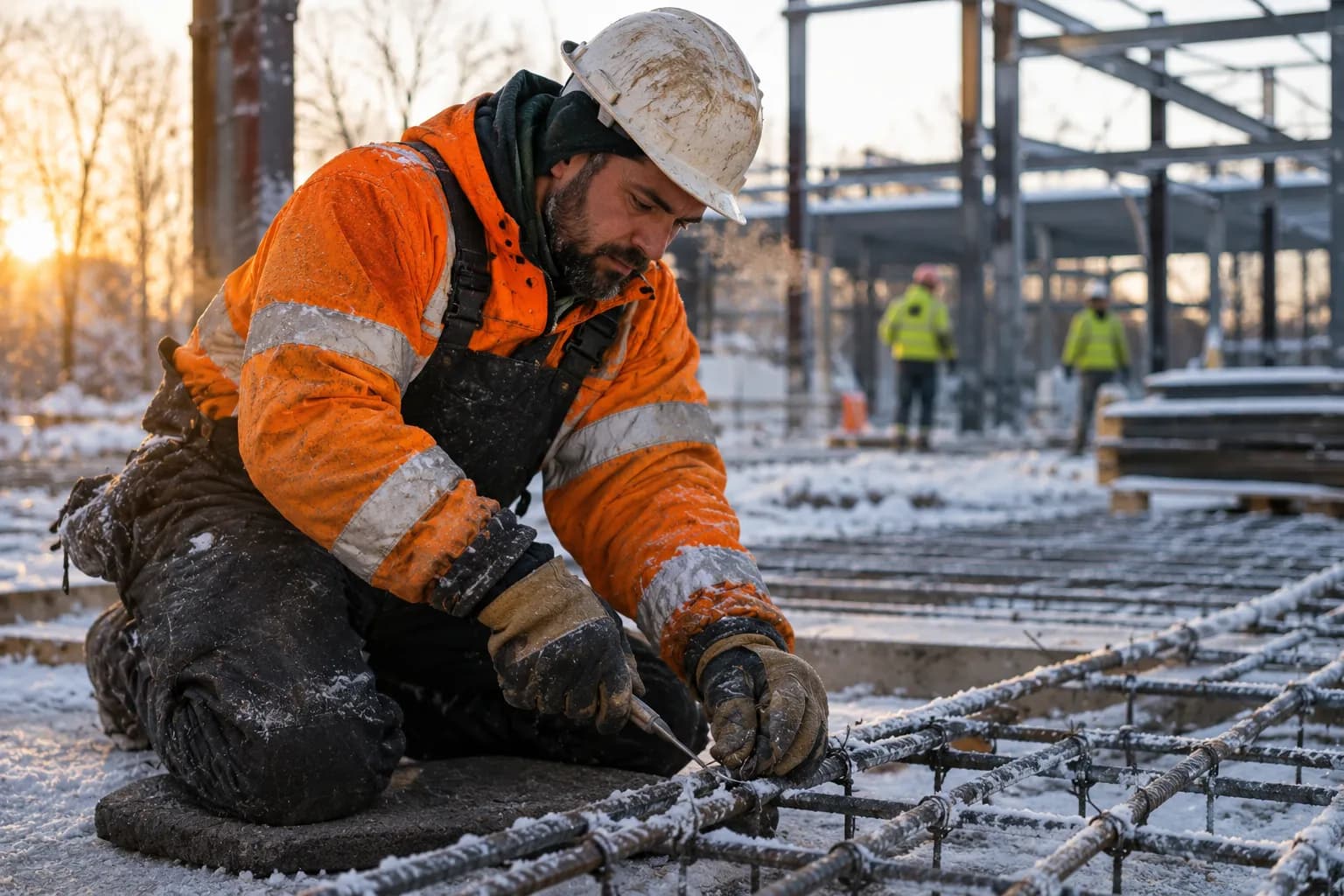
If you work around traffic or moving equipment, look at your reflective tape before you head out. It should be clean, unbroken and visible from the front, back and sides, not hidden under a jacket or a pack strap. The CHILL-BLOC® Hi-Vis Coveralls carry reflective tape on the arms, waist and legs, which only helps if nothing is covering it.
Then pack water and something warm to drink. Cold air is dry and you still sweat under insulation, but thirst is easy to miss in the cold. A flask of something warm and sweet gives you a reason to take a proper break and helps you rewarm when you do.
Know the plan before you need it
Find out where the warm-up area is today, especially on a new site or in an unfamiliar part of the yard. Know how you will get to it and when breaks are planned. Then tell someone where you will be working and roughly when you expect to check in. A coworker who knows your plan is the person who notices when you are late, quiet or not making sense.
A worked example
Take someone working an outdoor loading yard, with a forecast of a still, frosty start, wind building by midday and sleet in the afternoon. The forecast check says the hard part of the day is the afternoon, not the morning. So the base layer is synthetic, the mid layer is a light fleece that can come off, and a water-repellent outer layer goes in the bag even though the sky is clear at dawn.
In the locker room every zip runs clean, but one pair of gloves is still damp from yesterday. That pair stays behind and a dry pair goes on, with a second dry pair in an inside pocket where body heat keeps it supple. Two pairs of socks go in the bag, and a balaclava goes in a pocket for when the wind arrives. By the end of the shift, every one of those choices has been used.
What crew leads should check
Individuals check their own kit. A crew lead checks the crew. A short huddle before work is the place to say the forecast and wind chill out loud, name the warm-up area and the break plan, and pair people up. It is also where a lead can spot the cotton hoodie under a jacket, the bare hands, or the new starter whose boots are still in the box.
Ask, without making a scene of it, whether anyone is unwell, short on sleep or has not eaten. OSHA's cold stress guidance counts exhaustion and certain health conditions among the things that raise risk, and they are easier to plan around at the start of a shift than to discover in the middle of it. A small stock of spare gloves, socks and head covers in the warm area fixes most of what a huddle turns up.
Quick recap
Check the forecast with the wind, dress from the skin out with no cotton, and test every zip and cuff while you are still indoors. Pack dry spares for hands and feet, make sure your reflective tape is showing, and know where the warm-up area is. Those few minutes are much easier to find before the shift than in the middle of it.