When to replace cold-weather workwear
Insulated workwear rarely fails in one go. It gets a little colder each month, a little wetter at the knees, a little harder to zip, until the shift you finally notice is the one where it has stopped working.
There is no fixed lifespan for a coat or a pair of bibs. It depends on how many shifts it does, what it rubs against and how it is looked after. Instead of counting years, look for the signs below.
Insulation that has gone flat
Hold the garment up to a bright window. Even fill looks evenly dark; flattened or clumped fill shows thin, bright patches, often across the shoulders, the seat and the knees, where it is pressed hardest. You will usually have felt it already as cold spots in the same places. Before you give up on it, wash and dry it properly as the care label says. A clean, fully dried garment sometimes gets back a good deal of loft. If the cold spots stay, the insulation is done.
Shell, seams and zips
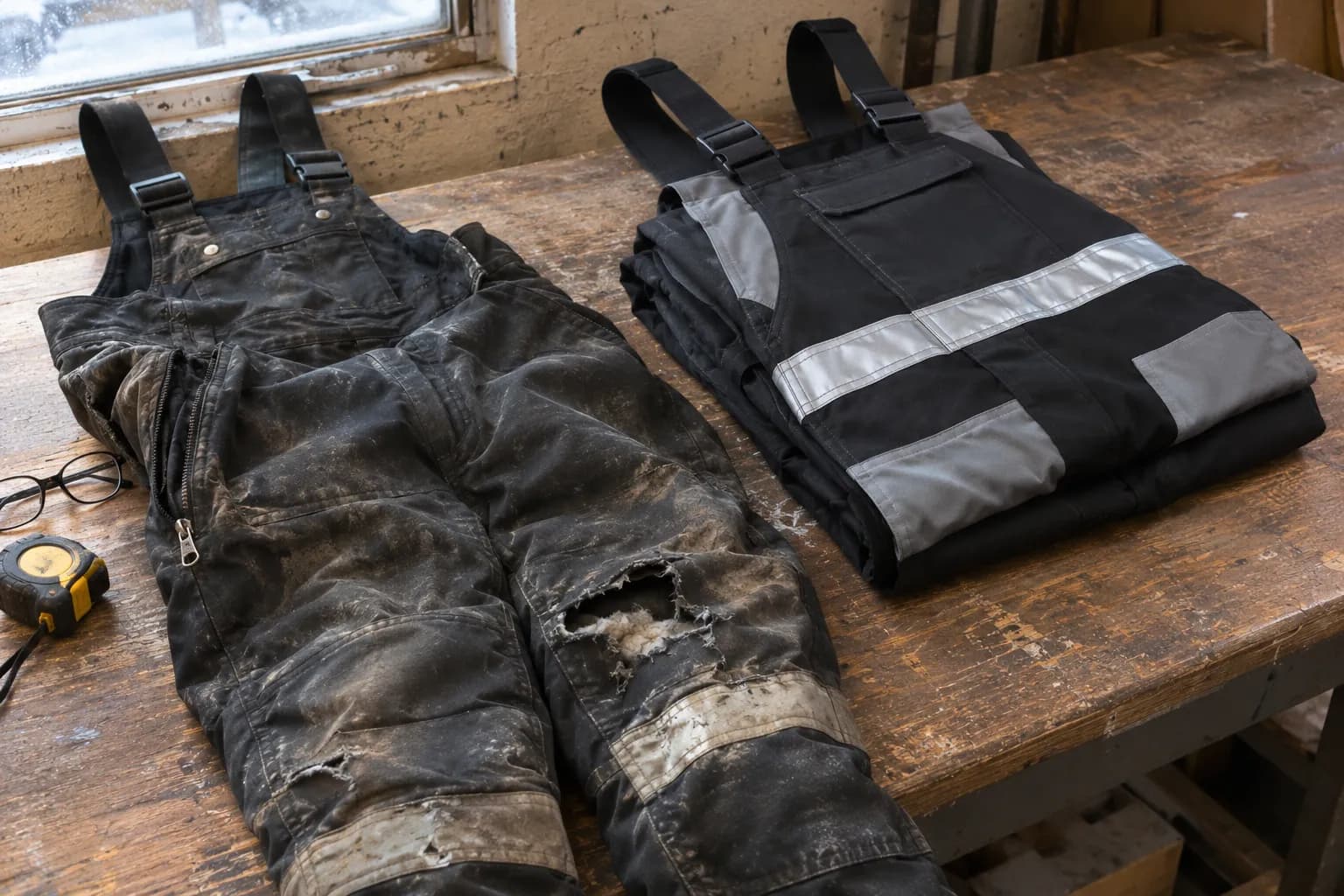
A small tear in the shell can be patched. A tear that runs along a seam, or seams that have opened in several places, lets wind and snow straight into the insulation and usually means the garment is near the end. Look hardest at the crotch, the underarms and the pocket corners.
Zips are often the first hardware to go. A worn slider is a cheap fix; a zip with missing teeth means a full replacement, which a repair shop can quote for you. On a long coverall zip, weigh that quote against the price of a new garment.
Water that no longer beads
When water soaks into the shell instead of beading and running off, it is usually the water-repellent finish that has worn, not the garment. Clean it, then re-proof it with a wash-in or spray-on treatment the label allows. That is often all it takes. If the fabric still soaks through after re-proofing, and your work keeps you in snow or slush, start planning a replacement, because a wet shell soon means wet insulation.
Cuffs, knees and reflective tape
Look at the places that rub: cuffs frayed through to the lining, knees worn thin from kneeling, hems cut up by boot heels. The CHILL-BLOC® Bib Overalls have reinforced seams, brass rivets and heel patches for exactly this, but everything wears through in the end. Once the shell is gone and insulation shows, water wicks straight in.
Reflective tape is a safety item, so the rule is stricter. Check it in the dark with a flashlight held close to your eyes: good tape sends the light straight back. If it is cracked, peeling or dull, or it no longer reflects, replace the garment and check what your site requires. On the CHILL-BLOC® Hi-Vis Coveralls the tape runs on the arms, waist and legs, so check all of it, not just the front.
Gloves that no longer grip or stay dry
Gloves wear out faster than anything else you own. Replace a pair when the palm has gone smooth and slippery, when the fingertips are worn through, or when a waterproof glove like the CHILL-BLOC® Coldshield Gloves starts letting water in at the palm or the seams. A glove that slips on a load or soaks through on a cold morning is a hand injury or a cold injury in the making.
When it no longer fits
A garment can be in good condition and still be the wrong one. If you now wear a thicker mid layer, or your work has changed, a coat or a set of coveralls that was right two winters ago may be tight over the layers you need. Tight insulation is compressed insulation, and compressed insulation is cold, so a snug fit across the shoulders, seat or knees costs warmth exactly where you bend. Sleeves that ride up when you reach, or a hem that lifts off your boots when you crouch, leave gaps for the wind.
Stretch headwear wears out through fit as well. A balaclava or headband that has gone baggy no longer seals around the face and neck, and a gaiter like the CHILL-BLOC® Fleece Neck Gaiter relies on its elasticated drawcord to close out cold air, so once the elastic stays slack the wind gets in at the top. When the fleece has worn thin or the stretch has gone, replace it. There is nothing to repair.
Repair or replace, and cost per shift
A useful rule: repair what is local, replace what is structural. A worn slider, a small tear, a loose button flap or a tired water-repellent finish can be fixed. Flat insulation, seams failing across the garment or a shell worn through in several places usually cannot be fixed for less than a new one costs.
When you are unsure, think per shift. Divide what the garment cost by the shifts it has given you so far, then compare a repair quote with how many more shifts it is likely to buy. A repair that gets a well-made coat through another season is usually cheap per shift. Paying to patch a garment that is already cold is not, because you are paying to stay cold.
Two examples. A pair of bibs with warm, even fill, a slipping slider on one leg zip and a small tear at the knee is a repair job: a new slider and a patch, and it goes back to work. A parka with cold patches across the shoulders, a seam opening under each arm and a shell that soaks through even after re-proofing is a replacement, however good it still looks on the hanger.
Checking a crew's gear before winter
For a crew, waiting for each person to complain is the expensive way to find worn gear, because people put up with a cold coat far longer than they should. A short check in early fall works better: each garment laid out, the insulation held up to the light, zips run end to end, tape checked with a flashlight and gloves turned over to look at the palms. It takes a few minutes per person and turns the first cold week's surprises into an ordinary order placed in good time.
Make it clear that asking for a replacement is normal. Someone whose gloves leak or whose coverall zip keeps splitting will often keep quiet and work cold, and that is how cold injuries and dropped loads happen. Keep a short record of what was replaced and when. Over a couple of seasons it shows which jobs are hardest on which garments, which is more useful for planning than any general rule.
Quick recap
Replace insulated gear when it stops keeping you warm, dry or visible, not when it reaches a certain age. Flat fill, failing seams, a shell that soaks through after re-proofing and tape that no longer reflects are the signs. Fix what is local, replace what is structural, and check a crew's gear before the cold arrives rather than during it.